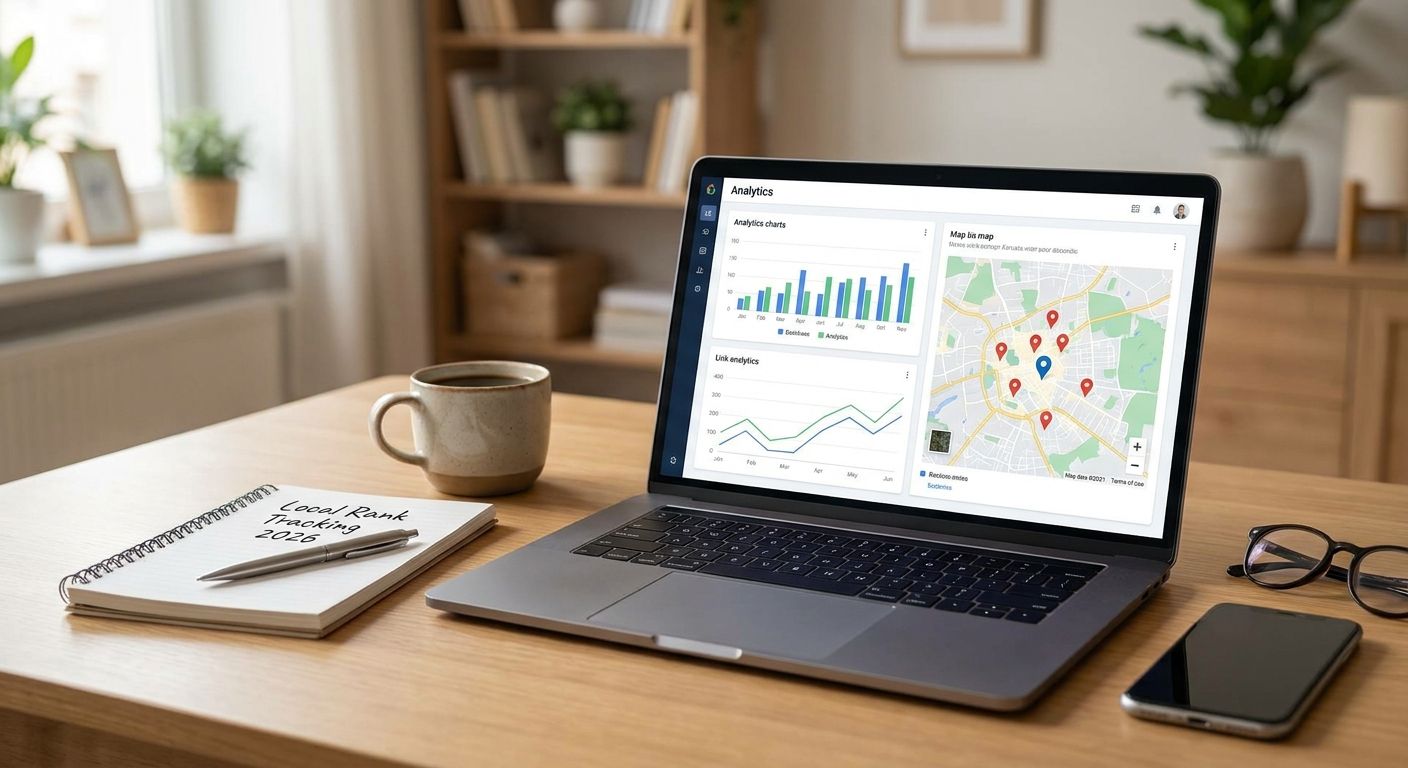
Local rank tracking in 2026 comes down to one question: do you need grid-based map pack visibility, or straightforward keyword position data across multiple client locations? The tools below split cleanly along that line, and picking the wrong one wastes months of reporting on numbers that don't match what customers actually see on Google Maps.
Best overall: BrightLocal — local rank tracking bundled with citation audits in one dashboard. Best for visual map-grid tracking: Local Falcon. Best budget option: SE Ranking. Best for agencies already inside the Semrush ecosystem: Semrush Local Position Tracking. Best for citation-heavy niches: Whitespark.
- BrightLocal wins overall for local rank tracking in 2026 by combining grid data with citation audits.
- Local Falcon is the sharpest pick for visual Google Business Profile grid tracking.
- SE Ranking is the budget option when you also need a general SEO toolkit.
- Grid-based scraping tools can brush against Google's terms of service — know the tradeoff before buying.
- No single local rank tracker replaces a real backlink and content strategy behind the rankings.
Why this matters
A rank tracker only tells you what's happening — it doesn't fix why a listing dropped out of the map pack. If your local rankings slide and the tracker just shows a red arrow with no context, you're paying for a screenshot, not an answer.
Most local businesses compete inside a 3-to-5 mile radius where map pack placement shifts weekly based on proximity, review velocity, and Google Business Profile activity. A national keyword rank checker misses all of that. Local rank tracking tools solve for radius-based visibility instead of a single national position, which is why the tool choice matters more here than in generic SEO tracking.
Pulsemodo's SEO guides break down the mechanics behind these rankings if you want the strategy layer before you buy the tracking layer.
What makes the best local rank tracking tool
- Grid or radius accuracy — pin-based scanning around the business location, not a single search from one IP.
- Google Business Profile integration — pulls review count, category, and GBP status alongside the ranking data.
- Multi-location and multi-client management — one login covering dozens of storefronts or franchise sites.
- Update frequency — daily pulls catch volatility; weekly pulls are cheaper and usually sufficient.
- White-label reporting — agencies need branded PDFs, not raw exports.
- Citation data crossover — some tools tie ranking shifts to citation consistency, which local SEO leans on heavily.
At a glance
| Tool | Best for | Standout feature | Key limitation |
|---|---|---|---|
| BrightLocal | Overall local tracking + citations | Local Search Grid with citation audit tie-in | Grid resolution feels basic against dedicated map tools |
| Local Falcon | Visual map-grid tracking | Pin-by-pin grid visualization up to 15x15 | Weak on organic (non-map) keyword tracking |
| Whitespark | Citation-heavy niches | Rank tracking bundled with citation building | Interface feels dated next to newer entrants |
| SE Ranking | Budget-conscious teams | Rank tracking inside a full SEO suite | Local grid data less granular than specialists |
| Semrush Local Position Tracking | Agencies already on Semrush | Local data inside the same dashboard as backlinks and audits | Local pack accuracy trails dedicated local tools |
1. BrightLocal: best local rank tracking tool for overall local SEO management
BrightLocal tracks map pack and organic local rankings while running citation audits and review monitoring in the same account. It's built specifically for local SEO rather than adapted from a general rank tracker, which shows in how it labels map pack versus organic position separately.
BrightLocal pros:
- Local Search Grid shows ranking variance across a configurable radius, not just one center point
- Citation audit flags NAP inconsistencies that often explain a ranking drop
- White-label reporting built for agencies managing multiple client accounts
BrightLocal cons:
- Grid resolution is coarser than Local Falcon's dedicated map visualization
- Onboarding multiple locations takes longer than single-location tools
BrightLocal is best for: agencies and multi-location businesses that want ranking data and citation health in one place.
Verdict: Buy if you manage more than one location and want fewer logins.
2. Local Falcon: best local rank tracking tool for visual Google Business Profile grid tracking
Local Falcon builds a visual grid of pins around a business address and shows exactly where a Google Business Profile ranks at each point — a heat map of visibility instead of a single number. It's the closest thing to seeing the map pack the way a customer standing three blocks away sees it.
Local Falcon pros:
- Grid sizes scale from tight 3x3 scans to wide 15x15 coverage for larger service areas
- Heat-map visualization makes ranking gaps obvious at a glance, useful in client calls
- Works well for single-location businesses that don't need full agency tooling
Local Falcon cons:
- Organic (non-map) keyword tracking is thin compared to BrightLocal or SE Ranking
- Scans that mimic searches from many grid points can edge toward Google's terms of service on automated querying
Local Falcon is best for: businesses obsessed with map pack visibility in a specific service radius.
Verdict: Buy if map pack placement is your primary local SEO metric.
3. Whitespark: best local rank tracking tool for citation-heavy niches
Whitespark started as a citation-building tool and added rank tracking on top, so the two data sets talk to each other directly — a ranking drop links straight to a citation inconsistency report. That pairing matters more in industries like legal, home services, and healthcare, where directory listings still carry weight.
Whitespark pros:
- Citation and rank data live in one workflow, cutting the manual cross-checking other tools require
- Local citation finder surfaces directories competitors are listed on that you're missing
- Solid for niches where NAP consistency still moves rankings meaningfully
Whitespark cons:
- Interface feels older than 2026-era competitors like Local Falcon
- Grid tracking isn't as visually sharp as dedicated map-grid tools
Whitespark is best for: businesses in citation-dependent categories that want ranking and citation data unified.
Verdict: Hold — strong if citations matter in your niche, skip if your category runs on reviews and content instead.
4. SE Ranking: best local rank tracking tool on a budget
SE Ranking folds local rank tracking into a broader SEO platform that also covers backlink monitoring, site audits, and keyword research. It won't out-track a local specialist, but it removes the need to pay for multiple separate subscriptions.
SE Ranking pros:
- Local tracking sits alongside backlink and audit tools, useful if you're already comparing backlink checker tools for the same account
- Reasonable entry point for small businesses not ready for a dedicated local suite
- Covers both organic and local pack tracking in one report
SE Ranking cons:
- Local grid granularity trails Local Falcon and BrightLocal
- Multi-location setup is more manual than purpose-built local platforms
SE Ranking is best for: small teams that want local tracking plus general SEO tooling without stacking subscriptions.
Verdict: Buy if you need one platform instead of three.
5. Semrush Local Position Tracking: best local rank tracking tool for agencies already on Semrush
Semrush added local pack tracking to its existing Position Tracking module, which means agencies already running keyword research, backlink audits, and site health checks through Semrush get local data without a new login. It's a convenience play more than a local-specialist play.
Semrush pros:
- Local data sits next to organic rank tracking, backlink data, and technical audits already in use
- Useful if the agency is also researching AI SEO tools that plug into the same dashboard
- Familiar interface for teams already trained on the platform
Semrush cons:
- Local pack accuracy and grid detail trail dedicated tools like Local Falcon or BrightLocal
- Local features feel bolted onto a platform built primarily for organic and enterprise SEO
Semrush is best for: agencies standardized on Semrush that want local data without a second subscription.
Verdict: Hold — fine as an add-on, not a reason to switch platforms on its own.
“If your grid points don't move with the map pack, the tool is measuring noise, not rankings.”
How we ranked these tools
Each tool was weighed against the six criteria above: grid accuracy, Google Business Profile integration, multi-location handling, update frequency, white-label reporting, and citation crossover. BrightLocal and Local Falcon scored highest on grid accuracy and GBP integration; SE Ranking and Semrush scored higher on value because they bundle local tracking with broader SEO functions instead of charging for a standalone tool.
Pair rank tracking with stronger backlinks
Local rankings move on links too — compare the backlink checkers that actually matter.
Which local rank tracking tool should you choose?
Pick BrightLocal if you manage multiple locations or clients and want citation health folded into the same report — it's the safest default for 2026. Pick Local Falcon if map pack visibility inside a tight service radius is the metric your business lives or dies on. Pick SE Ranking if budget is the deciding factor and you'd rather run one SEO platform than three. Whitespark and Semrush both earn a Hold — good add-ons for the right niche or the right existing stack, not the first tool to buy standalone.
FAQ
What's the best local rank tracking tool in 2026?
BrightLocal is the strongest overall pick in 2026 because it combines local rank tracking with citation audits in one dashboard. Local Falcon is the better choice specifically for visual map-grid tracking.
Is Local Falcon better than BrightLocal?
Local Falcon has sharper map-grid visualization, but BrightLocal covers more ground with citation audits and organic local tracking combined. Choose Local Falcon if map pack visibility is your only concern, BrightLocal if you need broader local SEO reporting.
How much does local rank tracking cost?
Pricing varies by number of tracked keywords, locations, and update frequency across vendors. Check current plans directly on each provider's site since pricing tiers change throughout the year.
How often should local rankings be tracked?
Weekly tracking catches most map pack movement without the noise daily grid pulls can introduce. Daily tracking makes sense during an active campaign or right after a Google algorithm update.
Do grid-based rank trackers violate Google's terms of service?
Grid tools simulate searches from many virtual points, which can edge close to Google's restrictions on automated querying. Most major vendors, including Local Falcon and BrightLocal, operate within accepted limits, but it's worth reading each vendor's methodology page.
Can one tool track rankings for multiple business locations?
Yes — BrightLocal, SE Ranking, and Semrush all support multi-location and multi-client tracking under one account. Local Falcon supports multiple locations too, though its interface favors single-location grid detail.
What's the difference between local pack tracking and organic rank tracking?
Local pack tracking measures where a Google Business Profile appears in the three-listing map pack for a given radius. Organic rank tracking measures where a webpage ranks in standard search results, which is a separate ranking system entirely.
Is Whitespark still worth using in 2026?
Whitespark still makes sense for niches like legal, home services, and healthcare where citation consistency has a measurable effect on local rankings. For categories where reviews and content matter more than directory listings, a dedicated grid tool is a better fit.
One last thing
Most businesses check their local rank tracker and stop there — they never look at whether the Google Business Profile itself has fresh photos, recent posts, or a review response in the last 30 days. Rankings and GBP activity move together in 2026's local algorithm more than most tracking dashboards make obvious, and no tool on this list fixes that for you.